
EXPLAINER: How To Switch Your Polling Station Ahead Of 2027 Elections
In Kenya, changing a voting station is a formal administrative process handled by the Independent Electoral and Boundaries Commission (IEBC).
 Viral Tea Ke Writer
The viral ‘Niko Kadi’ and ‘Tuko Kadi’ slogans that took over social media have sparked a surge in voter registration among young Kenyans ahead of the 2027 General Election. At the same time, the trend has revived a key question: how can registered voters switch their polling stations if they plan to vote in a different location from where they cast their ballots in 2022?
In Kenya, changing a voting station is a formal administrative process handled by the Independent Electoral and Boundaries Commission (IEBC). The process, officially known as a transfer of voter registration, allows voters to update their polling stations to reflect where they currently live, work, or study.
The service is free and is particularly useful for individuals who have relocated or those who prefer to vote in their home constituencies despite living elsewhere. However, the process is governed by clear rules and timelines that must be followed.
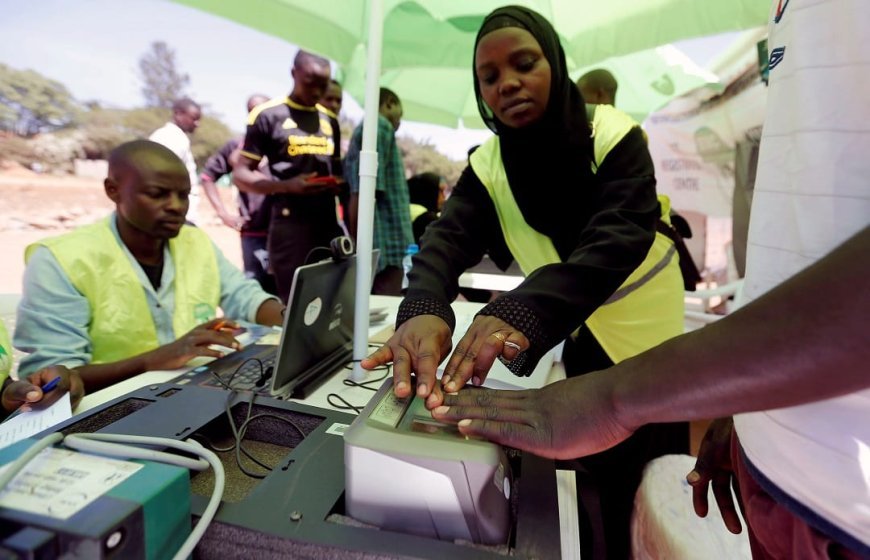
IEBC officials during a past voter registration exercise. /REUTERS
When You Can Apply for a Transfer
Voter transfers are not conducted continuously. The IEBC only allows them during specific voter registration or voter register revision periods, which are publicly announced, often ahead of elections or by-elections.
Since September 2025, the commission has been running a Continuous Voter Registration (CVR) exercise aimed at enrolling more than six million voters. The drive mainly targets young people, alongside eligible citizens who have yet to register or need to update their details.
However, those seeking to transfer their polling stations must do so within these official windows. Applications are not accepted once the registration period closes, making timing a critical factor, especially for recently relocated voters.
Where and How the Process Happens
The transfer process takes place at IEBC constituency offices and authorised registration centres located across the country. These centres also function as polling stations during elections.
To initiate a transfer, a voter must appear in person at a registration centre in the area they wish to vote. Despite ongoing digitisation efforts, the IEBC has not introduced an online transfer option, and the process cannot be completed through a third party.
Step-by-Step Transfer Process
Before applying, voters are encouraged to confirm their current registration details, including their polling station, ward, constituency, and county. This helps avoid errors during the transfer.
At the registration centre, applicants must present their original national ID card or a valid Kenyan passport—the same identification used during their initial registration.
IEBC officials then issue a transfer application form, which requires the voter to fill in personal details, current polling station information, and the preferred new location. Applicants may also indicate reasons for the transfer, such as relocation for work, education, or other personal circumstances.
Once the form is submitted, IEBC officials verify the details against the national voter register to confirm eligibility and accuracy. In some instances, there may be minimum requirements, such as having been registered at the current station for a certain period.
After successful verification, the voter’s details are updated, and the new polling station becomes their official voting location for future elections.
Key Rules You Must Know
The IEBC outlines several conditions that govern voter transfers. Only individuals who are already registered voters can apply for a transfer, and the process is free of charge.
Each voter is limited to one polling station at any given time. Attempting to register or transfer in multiple locations is an electoral offence that may attract penalties, including fines or imprisonment. These safeguards are meant to protect the integrity of the voter register and prevent duplication or fraud.
Why Many Kenyans Are Switching Stations
Relocation remains the main reason voters change their polling stations, whether moving across counties, constituencies, or from rural to urban areas. Other reasons include job transfers, education, and changes in residence.
Some voters also choose to switch stations to ensure they participate directly in elections within their home constituencies, even if they currently live in cities.
With high internal migration, particularly among young people, the ability to update voting locations plays a key role in ensuring wider participation in elections.
Challenges and Limitations
Despite being accessible, the process comes with limitations. The lack of an online option means voters must physically visit registration centres, which can be inconvenient for some.
In addition, restricting transfers to specific registration periods often results in high demand, long queues, and last-minute rushes when the exercise is open.
Switching a voting station in Kenya is a clear but time-sensitive process regulated by the IEBC. Voters must wait for the registration window to open, apply in person, and undergo verification before their details are updated.
Once approved, the new polling station becomes the official voting location for subsequent elections. While the process may appear rigid, the IEBC maintains that these controls are essential to ensure an accurate, transparent, and credible voter register—considered the backbone of Kenya’s electoral system.
![Inside Murugi Munyi's New Ksh7.5 Million Land Rover [PHOTOS]](https://viraltea.co.ke/uploads/images/2023/02/image_380x226_63dbd5d2e35cc.jpg)