Kenya Airways Unveils Africa-First Project to End Reliance on Imported Jet Fuel
The proposed facility will produce low-carbon aviation fuel using waste products such as used cooking oil, animal fats, and vegetable oils.
 Vantage Ke Writer


National airline Kenya Airways and Rubis Energy Kenya have signed a deal to develop what is expected to be Africa’s first dedicated sustainable aviation fuel (SAF) refinery, in a move aimed at cutting aviation emissions and reducing Kenya’s reliance on imported jet fuel.
The agreement, signed in Nairobi on Tuesday, May 12, during the Africa Forward Summit attended by Presidents William Ruto and Emmanuel Macron, will see the two firms jointly explore the engineering, financing, and operation of a refinery near Jomo Kenyatta International Airport (JKIA) in Nairobi.


According to the partners, the proposed facility will produce low-carbon aviation fuel using waste products such as used cooking oil, animal fats, and vegetable oils.
The refinery is expected to produce 32,000 tonnes of SAF annually, with the project estimated to cost between €60 million and €70 million (about Ksh8.8 billion and Ksh10.3 billion).
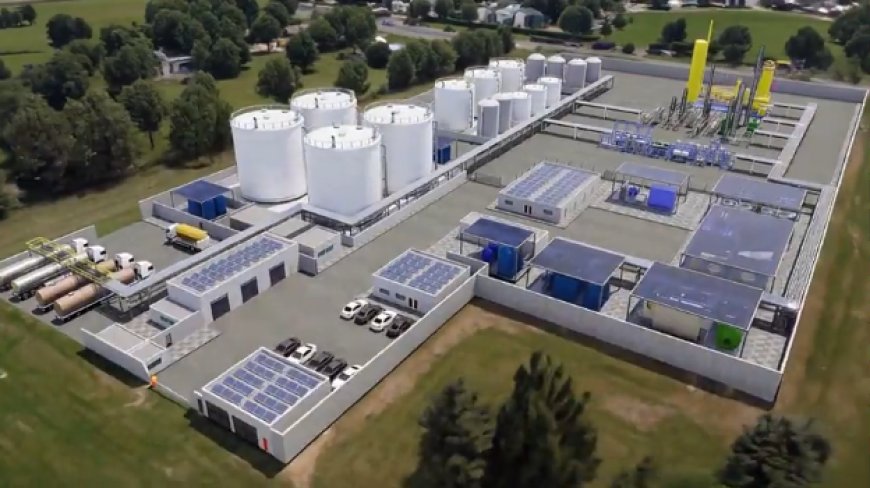
A model of the upcoming dedicated Sustainable Aviation Fuel (SAF) refinery in Nairobi. /DRAGONFLY
The project will rely on modular refinery technology developed by Dragonfly, a company partnering with Rubis on the venture. Dragonfly says the facility could be operational within 24 months.
Kenya Airways Acting Group Managing Director and CEO George Kamal stated that the project was aimed at tackling aviation-related carbon emissions, noting that demand for air travel continues to rise globally.
“The expansion of air transport is linked to a growing share of global greenhouse gas emissions. Currently, Jomo Kenyatta International Airport consumes 2.9 million litres of jet fuel every day, an amount equal to filling the tanks of 52,727 family cars,” Kamal stated.
He added that sustainable aviation fuel remains “the most commercially viable, technologically mature, and lowest-risk solution” currently available for reducing emissions in the aviation sector.
“While we currently depend entirely on imports, this refinery allows us to produce a sustainable, local version of that fuel,” he stated.
The airline also linked the project to global pressure on carriers to transition to cleaner energy sources as the aviation industry works toward the International Civil Aviation Organization’s (ICAO) target of achieving net-zero carbon emissions by 2050.
Rubis Énergie Chief Executive Officer (CEO) Jean-Christian Bergeron stated that the company would prioritize local skills development and technology transfer as part of the project rollout.


“Our priority will be technology transfer and ensuring that training is provided for local skills development so that the facility, and associated supply chains, will be operated and managed by Kenyans,” Bergeron stated.
The announcement comes as African airlines and governments increasingly face pressure to adopt greener fuel alternatives amid rising scrutiny over aviation emissions and fuel costs.
If completed, the Nairobi facility would position Kenya among the first countries on the continent to locally produce SAF at a commercial scale, potentially turning Nairobi into a regional hub for cleaner aviation fuel supply.