Kenya Police Save Activist From Cross-Border Abduction Plot
The Law Society of Kenya and Amnesty International Kenya described the rescue as a decisive intervention that underscores Kenya’s constitutional and international obligations to protect individuals at risk
 Marvin Chege
The Law Society of Kenya (LSK) and Amnesty International Kenya have hailed a swift and coordinated security operation that rescued a prominent Tanzanian activist from an alleged cross-border abduction plot, in a case now raising fresh concerns over transnational repression in East Africa.
In a joint statement released on Monday, February 23, the two organisations praised officers from Lukenya and Kyumbi Police Posts, as well as Directorate of Criminal Investigations (DCI) detectives from Kyumbi, and other national and county security agencies for intervening on Sunday, February 22, to rescue Tanzanian human rights defender Mshabaha Mshabaha Hamza.
The operation, they noted, likely saved his life and prevented what appeared to have been a forced rendition to Tanzania.
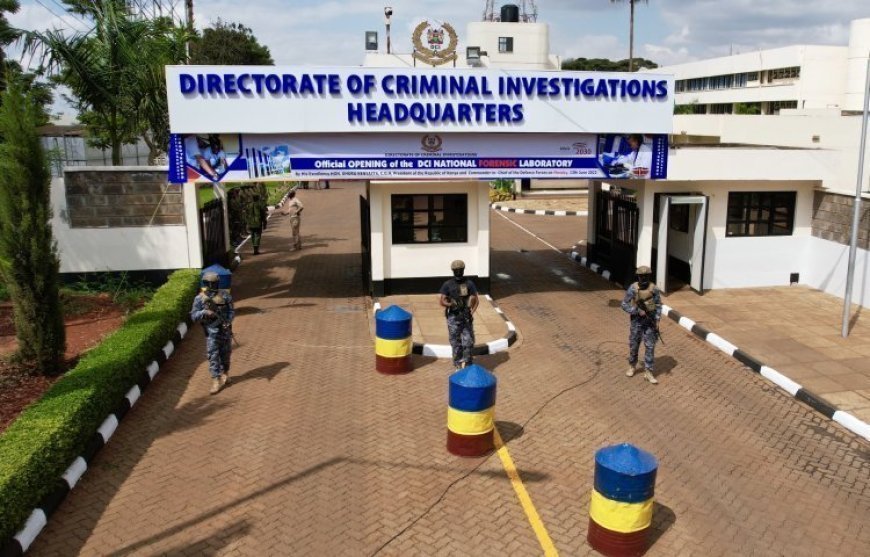
Officers stand guard at the entrance of DCI headquarters along Kiambu Road. /NATIONAL POLICE SERVICE
“The Law Society of Kenya and Amnesty International Kenya commend the swift, coordinated action taken yesterday, Sunday, February 22, by officers from the Lukenya and Kyumbi Police Posts, DCI Kyumbi, and other national and county security and government agencies,” the statement read.
According to documents presented in court, Hamza was allegedly abducted in a violent and premeditated attack before managing to resist his captors. He was later dumped at the Lukenya stage while drugged and injured, prompting a rapid police response.
Officers intercepted the suspects’ vehicle shortly after and arrested three individuals, namely Edward Mwangi Mwai, a Kenyan national reportedly residing in South Africa; Nelson Wanjohi Kirika, the driver; and Aziz Hamad, a Tanzanian national.
Hamza is widely recognised for his activism on democracy, accountability, and justice in Tanzania, particularly following the country’s 2025 post-election violence. He is also a member of the Pan-African Solidarity Network, a regional collective focused on resisting authoritarianism across the continent.
LSK and Amnesty Kenya described the rescue as a decisive intervention that underscores Kenya’s constitutional and international obligations to protect individuals at risk, especially human rights defenders operating across borders. They warned that such incidents highlight the growing threat faced by activists in the region.
"Amnesty International Kenya and the Law Society of Kenya welcome the decisive intervention by the Kenyan authorities to protect his life and prevent his forced rendition to Tanzania. The action reflects Kenya’s constitutional and international obligations to safeguard all individuals, especially human rights defenders, who face heightened risks," added the statement.
The organisations have now called for a full, transparent, and impartial investigation into the identities, motives, and networks that were allegedly waiting to receive Hamza at the Kenya–Tanzania border.
They also demanded accountability beyond the three suspects already arrested, urging authorities to pursue any individuals—whether in Kenya, Tanzania, South Africa, or elsewhere—who may have planned, financed, or directed the operation.
Further, they pushed for closer collaboration between human rights organisations and Kenyan authorities to strengthen protection mechanisms for activists, particularly those in exile or working in cross-border contexts. They stressed that attempts to abduct, harm, or silence activists violate fundamental freedoms and amount to transnational repression.
The two organisations maintained that Kenya must ensure its territory is never used for forced renditions or attacks against human rights defenders. They confirmed they will continue monitoring the case while supporting efforts to secure justice for Hamza and enhance the safety of activists operating within Kenya and across the wider region.
The recent events come amid growing allegations that Kenya has collaborated with other East African nations to abduct and forcibly deport activists and government critics to face prosecution in their home countries.
In January 2025, Tanzanian human rights activist Maria Sarungi, known for her criticism of President Samia Suluhu, was reportedly abducted by three armed men in Nairobi’s Kilimani area, though she was later released.
Similarly, in late 2024, Uganda’s opposition leader Kizza Besigye was abducted in Nairobi and forcibly returned to Uganda for a military trial. He remains in detention without having faced a proper judicial process.