Ruto Explains Why Fuel Prices In Kenya Are Highest Compared To Uganda & Tanzania
His remarks come amid rising public concern following a recent fuel price hike by the Energy and Petroleum Regulatory Authority (EPRA)
 Viral Tea Ke Writer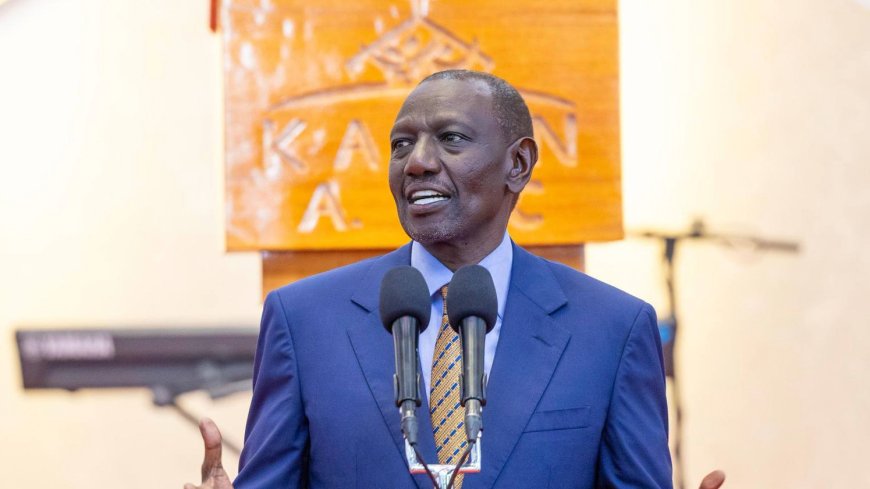
President William Ruto has, for the first time, responded to growing concerns over why fuel prices in Kenya are higher than in neighbouring countries such as Tanzania and Uganda.
Speaking during a church service in Karen on Sunday, April 19, the president linked the price disparity to Kenya’s level of development and the country’s substantial investment in road infrastructure.
He explained that Kenya’s classification as a middle-income economy, unlike many of its East African Community (EAC) peers, contributes to the higher cost burden.
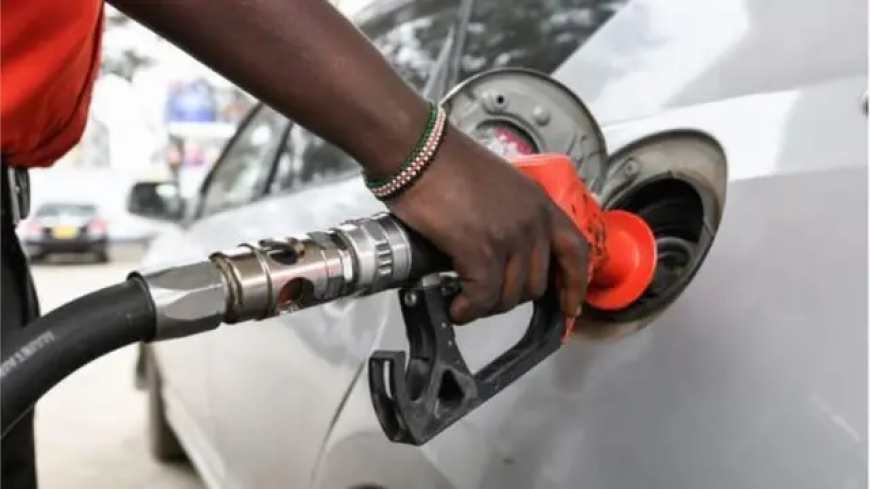
A man fueling a car at a petrol station. /BBC
“Many people keep asking why prices in Kenya differ from those in our neighbouring countries. It is important to clarify that Kenya is a middle-income country, while many of our neighbours are classified as least developed countries, and that creates a significant difference," the President explained.
"If you want to compare Kenya fairly with others, compare Kenya with other middle-income countries. That is when you will get the figures right," he added.
Ruto also pointed to road maintenance levies as a major factor, noting that a considerable share of fuel costs is channelled into sustaining the country’s road network.
"Kenyans need to understand that we currently maintain over 20,000 kilometres of tarmac roads across the country and have another 6,000 kilometres under construction," he said.
He further argued that Kenya’s 20,000 kilometres of tarmac roads surpass the combined network of other East African nations, including Uganda and Tanzania.
The president maintained that taxes embedded in fuel prices are structured to fund transport infrastructure, which in turn supports economic activity through better connectivity, trade, and mobility.
Beyond the ongoing 6,000 kilometres of road works, he revealed plans to expand the network further.
"We are setting our standards even higher. Our target is to construct an additional 28,000 kilometres of tarmac roads in the next seven years," Ruto added.
His remarks come amid rising public concern following a recent fuel price hike by the Energy and Petroleum Regulatory Authority (EPRA).
On April 14, pump prices rose to above Ksh206 per litre for both petrol and diesel before a subsequent revision set petrol at Ksh197.60 and diesel at Ksh196.63 per litre for the coming month.
The increases have triggered comparisons across the region, with Kenyans noting lower prices elsewhere. In Uganda, petrol currently sells for about Ksh185–190 per litre and diesel between Ksh175–183, while in Tanzania, petrol averages around Ksh191 and diesel roughly Ksh190.