Ruto Under Fire Over Blocking Of Standard Group Journalists From Naivasha Event
A State House communications official, who identified himself as a communications director, allegedly informed the journalists that the media house would not be allowed to cover the event
 Marvin Chege
The Kenya Editors Guild has condemned the alleged blocking of Standard Group Limited journalists from covering President William Ruto’s education conference in Naivasha, terming the incident a dangerous attack on press freedom and independent journalism.
The standoff unfolded on Thursday, May 7, at the Lake Naivasha Resort during the accreditation process for the Second National Education Conference, a high-profile forum expected to address delayed school capitation, a nationwide teacher shortage, and uncertainty surrounding the transition to Grade 10 under the Competency-Based Curriculum (CBC).
According to reports from the scene, journalists from multiple media houses had assembled at the accreditation desk before entering the venue when officials reportedly singled out reporters from Standard Group and denied them access to the conference.
A State House communications official, who identified himself as a communications director, allegedly informed the journalists that the media house would not be allowed to cover the event due to what he termed negative reporting against the government.
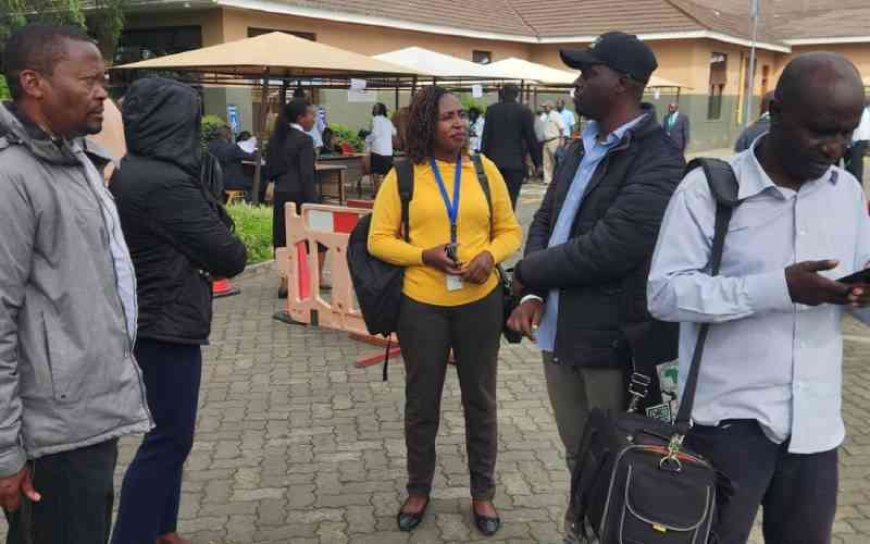
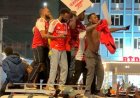
Standard Group journalists stand outside Lake Naivasha Resort after State House officials denied them accreditation to cover the Second National Education Conference in Naivasha on May 7, 2026. /STANDARD DIGITAL
“I can tell you for free that any other media house will enter the venue but not the Standard, mko na ujinga sana (you are full of nonsense),” the official was quoted as saying, adding, “I don’t have a problem with you, but you can tell your bosses that you shall not enter the meeting."
The official then reportedly proceeded to accredit journalists from other media organisations, including freelance reporters, while Standard journalists remained locked out of the event.
President Ruto was expected to attend the conference as pressure mounted on the government to address key concerns in the education sector, including delays in capitation disbursement, understaffing in schools, and the rollout of Grade 10 pathways under CBC.
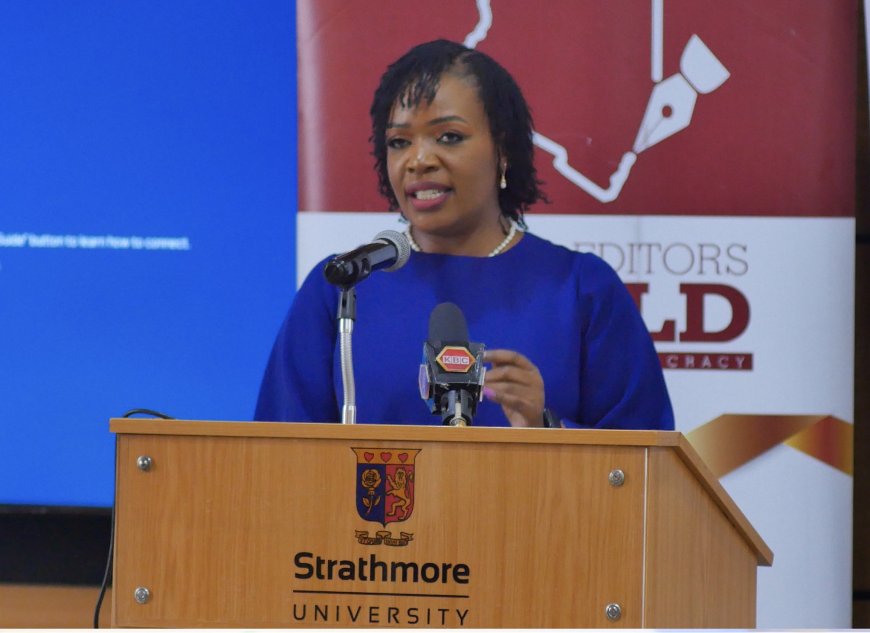
Hours after the incident, KEG issued a sharply worded statement condemning both the exclusion of journalists and inflammatory remarks allegedly directed at sections of the media. In the statement signed by KEG President Zubeidah Kananu, the editors’ body described the developments as “a deeply disturbing escalation in hostility against the media.”
The guild noted that the incident came barely days after Kenya commemorated World Press Freedom Day, arguing that the move exposed growing intolerance toward independent journalism and public scrutiny.
“The media is not an extension of the State. Neither is it a public relations department for those in power,” the statement read, adding, “Journalism exists to question, investigate, critique, and hold authority accountable on behalf of the public.”
KEG further criticised what it described as increasing attempts by leaders to intimidate and isolate media houses whose reporting is viewed as critical of the government.
“It is therefore alarming that instead of responding to criticism through facts, openness and accountability, certain leaders now appear increasingly inclined toward exclusion, intimidation and public vilification of media institutions whose coverage they dislike,” the statement continued.
The editors’ lobby also warned that public attacks against journalists and media owners could create a hostile environment for the press and weaken democratic accountability.
According to the guild, barring journalists from public events because of editorial positions or perceived criticism amounted to a direct violation of Article 34 of the Constitution, which guarantees freedom and independence of the media.
“We must ask: Has the State become so desperate and intolerant of criticism against its actions that it now sees independent media as an enemy to be punished rather than a constitutional pillar to be respected?” KEG posed.
The organisation cautioned that democratic erosion often begins gradually through sustained hostility toward the press, branding critical journalism as adversarial, and attempts to delegitimise independent media voices.
“We therefore condemn in the strongest possible terms the exclusion of Standard Media Group and Mediamax journalists, as well as the inflammatory rhetoric directed at sections of the media,” the statement added.
KEG also called on public officials, including President Ruto, to demonstrate commitment to constitutionalism and media freedom through their actions rather than public declarations alone.
“Criticism is not sabotage, scrutiny is not hostility, and journalism is not treason,” Kananu stated. “A confident government does not fear scrutiny. Only insecure power fears questions.”