Kenya Gives Update On Talanta Stadium Amid Tough Demands From CAF
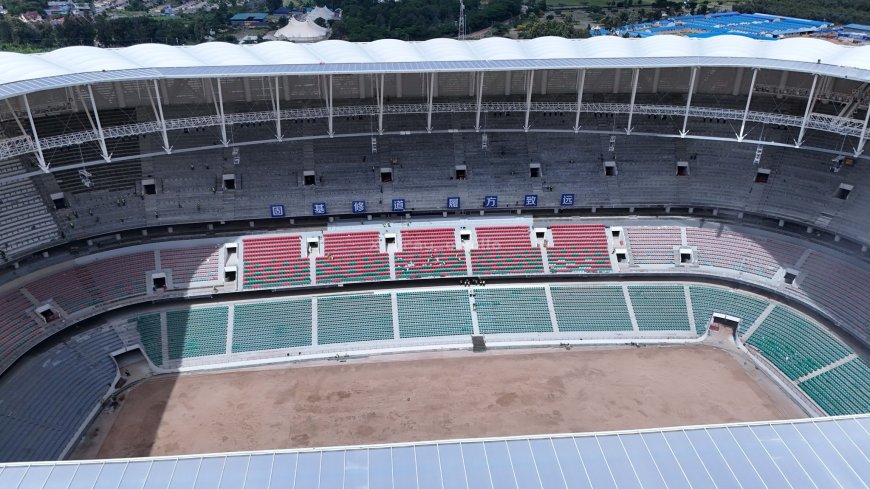
The facility, renamed in December 2025 in honour of the late former Prime Minister Raila Odinga, has already achieved key structural milestones.
 Viral Tea Ke Writer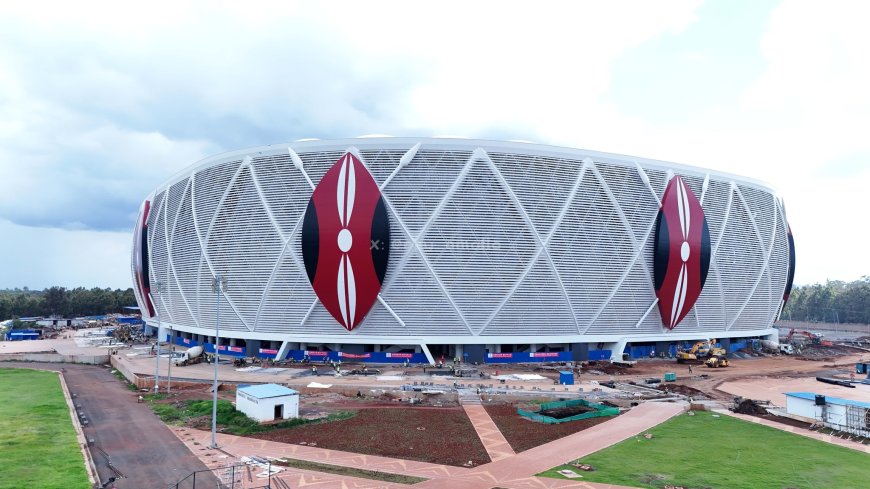
Kenya’s preparations to host the 2027 Africa Cup of Nations (AFCON) are entering a critical stretch, with the government confirming that its flagship venue is nearing completion, even as fresh demands from the continental football body are piling pressure on timelines.
In a statement, Interior Principal Secretary (PS) Raymond Omollo revealed that the 60,000-seater Raila Odinga International Stadium — set to be renamed from Talanta Stadium — at Jamhuri Grounds in Nairobi is in its final construction phase and on track to host what he claims are 'both the opening and closing ceremonies of AFCON 2027'.
The facility, renamed in December 2025 in honour of the late former Prime Minister Raila Odinga, has already achieved key structural milestones.
“The project is in its final construction phase, with the superstructure complete and works focusing on seat installation, broadcast systems, lighting, and final electrical and ICT fittings,” Omollo stated.
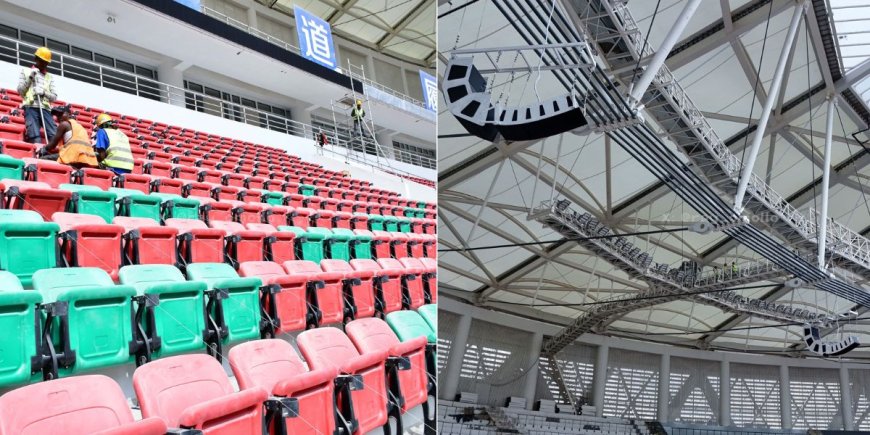
Interior of the upcoming Talanta Stadium as of April 21, 2026. /RAYMOND OMOLLO
He added that internal finishes are nearly done, with installations such as public address systems, giant screens, and floodlights already in place, pushing the stadium closer to operational readiness.
Omollo’s update comes weeks after the Confederation of African Football (CAF) issued a notice to Kenya outlining strict conditions that must be met before the stadium can be cleared to host AFCON matches.
In its directive, CAF called for validation of spectator movement plans, proper zoning of teams, officials, and media, confirmation of a functional Venue Operations Centre (VOC), and full coordination of critical systems, including lighting, backup power, and safety infrastructure.
According to Omollo, progress has already been made on several of these requirements, noting that the lights and systems, such as the public address and screens, are already installed as required by CAF, even as work intensifies on the remaining components.
Beyond capacity, the government is pitching the stadium as a world-class facility built on modern engineering and sustainability standards.
The venue features a computerized hydraulic tension cable system supporting the roof, alongside an exterior façade inspired by Kenya’s national emblem.
It also integrates an irrigation pump room, fire and domestic water storage systems, and a roof-harvested rainwater management system designed to collect, treat, and recycle water for pitch irrigation.
Fans and teams can also expect upgraded matchday experiences, including retail spaces, modern changing rooms, and Video Assistant Referee (VAR)-enabled officiating suites aligned with international football standards.
At the same time, Omollo stressed that security and logistics remain a central focus ahead of the high-stakes tournament.
“The State Department for Internal Security and National Administration has been instrumental in synchronizing multi-agency operations around the project, overseeing compliance with national event security standards, coordinating crowd management frameworks, and aligning local administrative units to support the stadium's certification as a secure, tournament-ready venue,” he stated.
CAF’s scrutiny is not limited to Talanta Stadium alone. The federation also issued requirements for Moi International Sports Centre, Kasarani, recommending a redesign of spectator flow and improved segregation to enhance crowd control, alongside the development of hospitality facilities such as VIP and VVIP sections and skyboxes to meet global standards.
Meanwhile, Nyayo National Stadium faces an uphill task, with CAF indicating it does not currently meet the required standards. The body warned that planned renovations may not be completed in time, significantly dimming its chances of hosting matches.
Kenya, alongside Tanzania and Uganda, is set to co-host AFCON 2027, with Talanta Stadium expected to serve as the country’s showpiece venue — a high-stakes test of its readiness to deliver Africa’s biggest football tournament.