Vital Feature Is Coming To ChatGPT Users Worldwide: What It Means For You
Access will matter. Reliable internet, digital literacy, and trust in data protection will determine who benefits.
 Marvin Chege
ChatGPT users are set to gain access to new health-focused tools following the rollout of ChatGPT Health, a dedicated section within the platform built to handle medical and wellness conversations.
OpenAI, the company behind ChatGPT, announced on Wednesday, January 8, positioning the feature as a way to help users make more informed health decisions as adoption of the chatbot continues to surge worldwide.
The new service allows users to link their medical records and wellness applications directly to ChatGPT, enabling more personalized and context-aware responses based on individual health data.
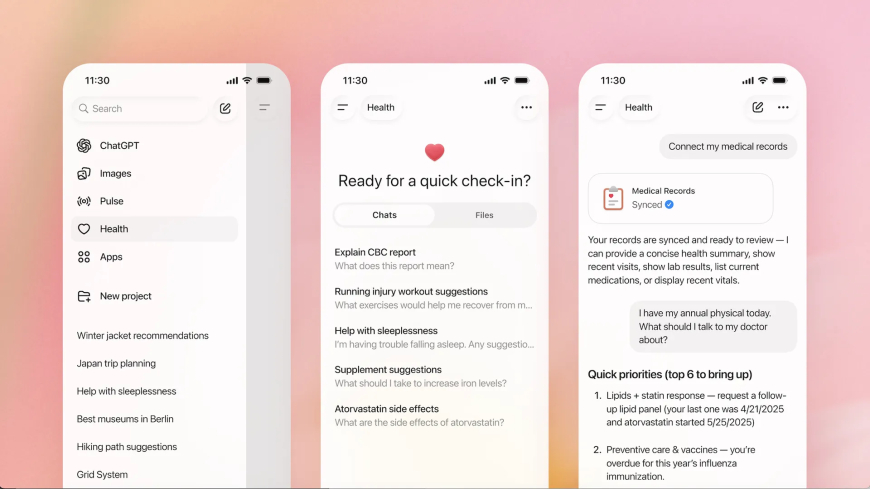
A photo of the new ChatGPT Health platform. /OPENAI
OpenAI indicates the tool can interpret medical test results, help users prepare for doctor visits, offer guidance on diet and fitness routines, and assist with comparing insurance options.
“You can securely connect medical records and wellness apps to ground conversations in your own health information, so responses are more relevant and useful to you,” OpenAI noted.
“Designed in close collaboration with physicians, ChatGPT Health helps people take a more active role in understanding and managing their health and wellness—while supporting, not replacing, care from clinicians,” it added.
The company points out that more than 230 million people use ChatGPT each week for health and wellness queries, making it one of the platform’s most common use cases and a key driver behind the feature, which has been in development for two years.
OpenAI plans to initially release ChatGPT Health to a limited group of users to refine the experience before a wider rollout.
Access will be granted via a waitlist, after which users will find the feature under the “health” tab in the ChatGPT sidebar. Once onboarded, users can upload medical records and connect health-tracking apps directly into the Health space.
OpenAI has emphasized that enhanced safeguards are in place to protect sensitive health data.
“Even before introducing ChatGPT Health, we built foundational protections across ChatGPT to give you meaningful control over your data, including temporary chats, the ability to delete chats from OpenAI’s systems within 30 days, and training our models not to retain personal information from user chats,” OpenAI stated.
What It Means
For Kenyans, ChatGPT Health signals a shift in how people access and understand health information, especially in a system where doctors are stretched, and appointments can be costly or slow.
The feature could help users make sense of lab results, prepare smarter questions before hospital visits, and track lifestyle choices like diet and exercise using data they already collect on their phones.
If integrated well, it may ease pressure on health facilities by helping people handle basic health literacy issues on their own, rather than rushing to clinics for clarity. It also has potential value for Kenyans managing chronic conditions who need consistent monitoring and explanations between hospital visits.
That said, access will matter. Reliable internet, digital literacy, and trust in data protection will determine who benefits.
It is not a replacement for doctors, but for many Kenyans, it could become a practical first stop for understanding their health before seeking professional care.